

The Frustration of the “Stalled” Recovery
There is a specific kind of frustration that comes with a chronic injury. Perhaps it started as a sharp pull in your heel when you stepped out of bed six months ago, or a persistent ache in your elbow that made lifting a kettle difficult. You rested, you iced it, maybe you even tried basic exercises, but the pain refused to leave. This is the hallmark of a “stalled” recovery.
In the medical world, we call this a transition from an acute injury to a chronic tendinopathy. The body has essentially stopped trying to heal the area, leaving behind disorganized, painful tissue. At CoreFlex Physio, we utilize Extracorporeal Shockwave Therapy (ESWT) to break this cycle. Shockwave therapy is not just a treatment; it is a biological “reset button” that forces the body to pay attention to neglected injuries.
What Exactly is a Shockwave?
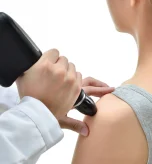
Despite the name, Shockwave Therapy does not involve electric shocks. Instead, it utilizes high-energy acoustic (sound) pulses. These waves travel through the skin and soft tissue to reach the site of the injury. When these waves hit a dense area, such as a scarred tendon or a calcified deposit, they create a physical force.
There are two primary ways these waves work:
- Cavitation Bubbles: The pressure of the sound waves creates tiny bubbles that collapse, generating a secondary force that helps break down calcified tissues and scar tissue.
- Mechanical Stimulation (Mechanotransduction): The physical “thump” of the wave sends a signal to your cells to produce healing proteins and growth factors.
The Biological Magic: Neovascularization
One of the most significant benefits of shockwave therapy for Tendon Recovery is a process called neovascularization. Tendons are notoriously slow to heal because they have a poor blood supply compared to muscles. This is why a calf strain might heal in weeks, but Achilles tendonitis can last for years.
Shockwave therapy creates “micro-trauma” in the treated area. While “trauma” sounds negative, this is a controlled medical stimulus. It trickles the body into believing there is a new injury, which triggers the growth of new capillaries (tiny blood vessels). This increased blood flow brings oxygen and nutrients directly to the damaged tendon, providing the building blocks necessary for the body to finally finish the repair job it started months or years ago.
Chronic Pain Management: Beyond the Surface
For those dealing with Chronic Pain Management, the goal is often just to get through the day without a flare-up. Shockwave therapy offers a unique neurological benefit: it can overstimulate the nerve endings in the painful area. This sounds counterintuitive, but by temporarily “overloading” the nerves that send pain signals to the brain, shockwave therapy can create an immediate (though sometimes temporary) analgesic effect.
More importantly, it reduces the concentration of “Substance P,” a neurotransmitter associated with intense pain. By lowering the chemical triggers for pain while simultaneously fixing the physical structure of the tissue, ESWT provides a dual-action approach that few other treatments can match.
Common Conditions Treated with ESWT
At our London clinic, we see a wide range of conditions that respond exceptionally well to shockwave therapy. These are typically “overuse” injuries that have become resistant to other forms of care:
- Plantar Fasciitis: That debilitating heel pain that is worst in the morning. Shockwave is often the gold standard for cases that haven’t responded to orthotics or stretching.
- Achilles Tendinopathy: Stiffness and pain at the back of the heel, common in runners and those with high-intensity London lifestyles.
- Tennis and Golfer’s Elbow: Pain on the inside or outside of the elbow caused by repetitive gripping or typing.
- Calcific Tendonitis of the Shoulder: Where calcium deposits build up in the rotator cuff, causing sharp, restricted movement.
- Patellar Tendonitis (Jumper’s Knee): Chronic pain just below the kneecap.
What to Expect: The CoreFlex Experience
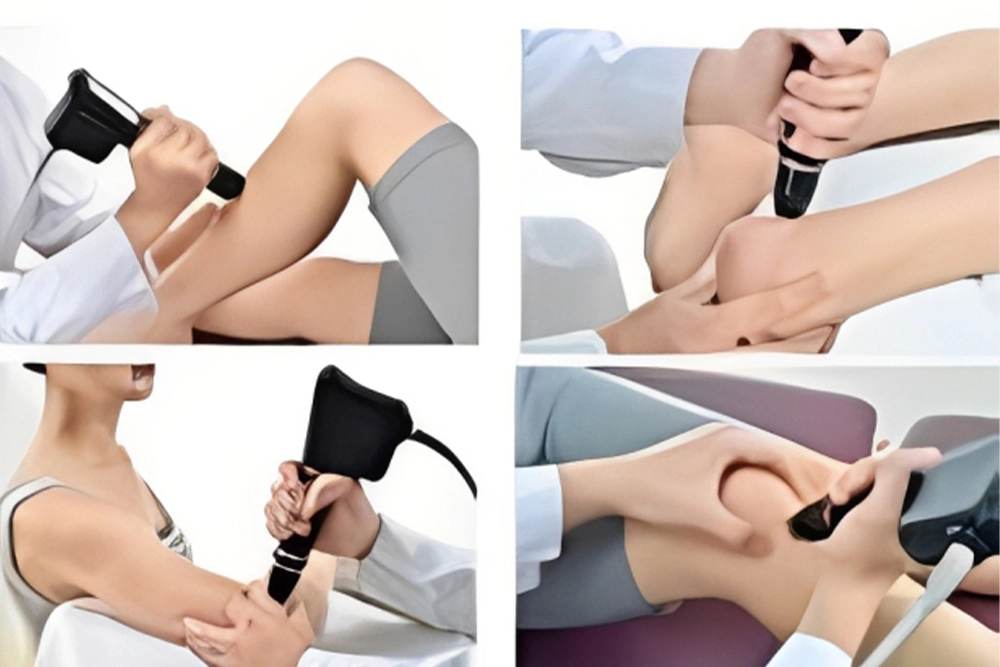
A common question patients ask is: “Does it hurt?” During a shockwave session, you will feel a series of rapid percussion-like pulses. It can be uncomfortable, often described as a “productive” pain, but it is not unbearable. The treatment usually lasts between 5 to 10 minutes per area.
The beauty of the treatment is its efficiency. Most patients require only 3 to 6 sessions, spaced one week apart. Unlike surgery or steroid injections, there is no “downtime.” You can walk out of the clinic and continue your day, although we recommend avoiding high-impact exercise for 48 hours after a session to allow the biological response to take place.
The Myth of the “Quick Fix” vs. The Reality of Loading
While shockwave therapy is incredibly powerful, it is not a magic wand. At CoreFlex, we integrate ESWT into a comprehensive physiotherapy plan. Why? Because the shockwave restarts the healing, but your Tendon Recovery requires movement to stay healthy.
Think of shockwave therapy as the “construction crew” that arrives at a building site. They clear the debris (scar tissue) and bring in the materials (blood flow). However, you still need the “architect” (physiotherapy) to ensure the building is built correctly. We combine shockwave with specific “loading exercises” that teach your new, healthy tendon fibers how to handle the weight of your body and the stress of your sport.
Shockwave vs. Steroid Injections
For many years, the go-to treatment for chronic pain was a corticosteroid injection. While these can offer rapid pain relief, we now know they can actually weaken the tendon tissue over time, increasing the risk of a rupture.
Shockwave therapy is the regenerative alternative. Instead of masking the inflammation with a steroid, shockwave promotes a pro-inflammatory healing response. It is non-invasive, has zero risk of infection compared to needles, and focuses on long-term structural integrity rather than a short-term “numbness”.
Why Londoners Choose Shockwave Therapy
Time is the most valuable currency in London. Most of our patients don’t have months to wait for a slow-healing injury to resolve. They need to be back on their feet, whether for a commute, a marathon, or simply to keep up with a busy family life.
Shockwave therapy fits the London lifestyle because it is fast, evidence-based, and highly effective. With success rates reported between 70% and 80% for chronic conditions, it represents one of the most reliable ways to move from “chronic sufferer” to “active individual”.
Conclusion: Reclaiming Your Mobility
If you have been told that you just have to “live with” your tendon pain, or if you are considering surgery as a last resort, shockwave therapy may be the missing piece of your recovery puzzle. By understanding the science of Chronic Pain Management and the biological requirements of Tendon Recovery, we can provide a treatment path that actually works.