


Introduction: The Hidden Cost of Capital
Living in London offers incredible opportunities, from the global reach of the City’s financial districts to the unmatched cultural vibrancy of the West End. However, these opportunities demand a physical toll that is often overlooked. The average Londoner spends over 200 hours a year commuting, a figure that ranks among the highest in the world. Whether you are squeezed onto a standing-room-only carriage on the Central Line, navigating the stop-and-start congestion of the M25, or cycling over London Bridge, your spine is under constant, relentless duress.
At CoreFlex Physio, we have identified a recurring pattern of what we call “Commuter Spine.” This isn’t a single injury, but rather a cluster of symptoms, neck stiffness, lower back pain, and radiating nerve discomfort, caused by prolonged static loading and repetitive postural stress. When you are “stuck” in a commute, your body isn’t just resting; it is fighting against gravity and vibration in positions it was never designed to maintain. To truly thrive in the capital, we must understand how these daily journeys reshape our anatomy and, more importantly, how we can reverse the damage.
The Anatomy of Sitting: What Happens to Your Spine?
To understand why your commute causes pain, we must look at the biomechanics of sitting. The human spine is naturally “S-shaped,” with a forward curve in the lower back known as the lumbar lordosis. This curve acts as a shock absorber. However, when we sit—especially in the cramped seats of a bus or a train, the pelvis tilts backward, causing the lumbar spine to flatten or “slump.”
This flattening increases the pressure on the intervertebral discs by up to 40% compared to standing. Furthermore, prolonged sitting keeps the hip flexors in a shortened position. Over time, these muscles become “tight,” pulling on the pelvis and lower back even when you are standing. This creates a cycle where your commute dictates your posture for the rest of the day, leading to that familiar dull ache at the base of your spine.
The “Tech Neck” Phenomenon: 60lbs of Pressure
If you look around any Tube carriage, you will see a sea of tilted heads. The “Tech Neck” phenomenon is perhaps the most significant postural challenge of the digital age. Your head weighs approximately 10–12 pounds when held in a neutral, upright position. However, for every inch you tilt your head forward to check an email or scroll through news, the effective weight on your cervical spine increases exponentially.
At a 60-degree tilt, a common angle for smartphone use, your neck is supporting the equivalent of 60 pounds. This massive strain stretches the ligaments and forces the muscles at the back of the neck to work overtime. This leads to tension headaches, jaw pain, and eventually, the early onset of wear and tear in the neck joints. Spinal Health is not just about the lower back; it starts at the base of the skull.
The Role of Specialist Physiotherapy
While generic advice often suggests “just sit up straight,” specialist physiotherapy at CoreFlex goes much deeper. We recognize that after years of commuting, your body may have lost the ability to find a neutral position.
Our clinical approach focuses on:
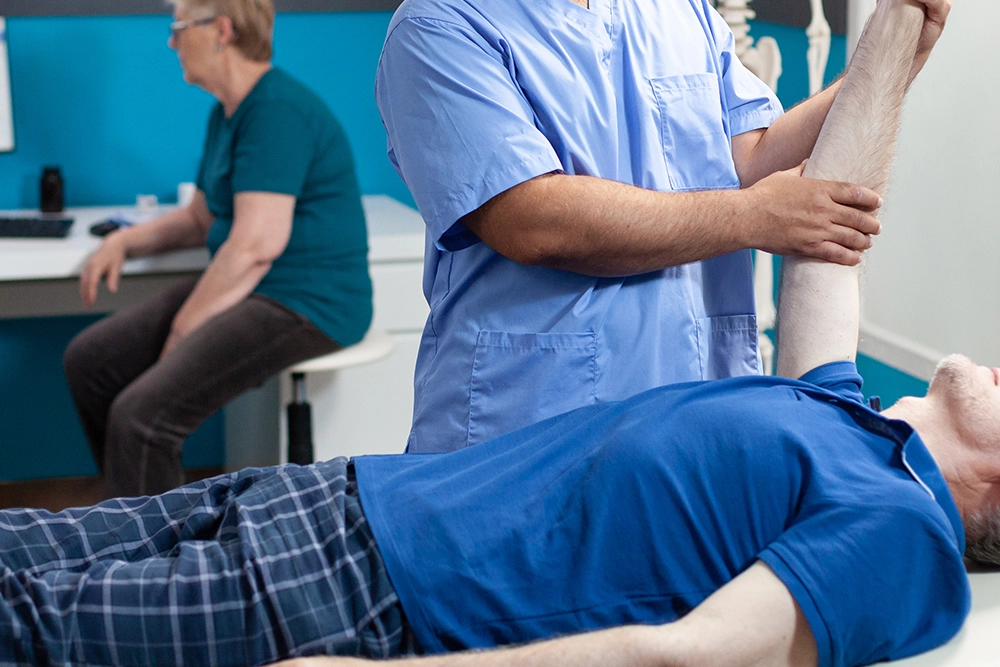
- Manual Therapy: We use hands-on joint mobilization to “unlock” the stiff segments of the thoracic and lumbar spine.
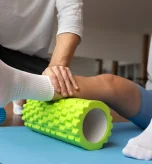
- Myofascial Release: We target the shortened hip flexors and chest muscles that pull you into a slumped posture.
- Postural Re-education: Using biofeedback and specific exercises, we help you find a sustainable “dynamic” posture.
By restoring the natural curves of the spine, we take the pressure off the discs and nerves, allowing your body to recover from the commute rather than just enduring it.
Practical Solutions: 5 Desk Stretches for London Professionals
You don’t need a gym to start improving your Posture Correction. Here are five stretches you can perform right at your office desk to counteract a heavy commute:
- The Seated Spinal Twist: Sit upright, feet flat. Place your left hand on your right knee and rotate your torso to look over your right shoulder. Hold for 20 seconds; repeat on both sides.
- Chest Opener: Interlace your hands behind your back and gently lift your arms, pulling your shoulder blades together. This reverses the “slump” of the commute.
- Seated Figure-Four: Cross your right ankle over your left knee. Lean forward slightly with a straight back to feel a stretch in the glute and hip.
- Chin Tucks: Gently pull your chin straight back (creating a “double chin”) to reset the cervical spine and counteract Tech Neck.
- Standing Desk Reset: Every 30 minutes, stand up and reach for the ceiling, extending your spine as much as possible.
Case Study: From Sciatica to Success
Take the example of “James,” a 42-year-old financial analyst living in Richmond and working in the City. James presented with chronic lower back pain and “pins and needles” radiating down his right leg, classic symptoms of sciatica. His hour-long commute on the District Line was the primary trigger; by the time he reached his desk, his leg was already throbbing.
Through a targeted 6-week program at CoreFlex, we identified that James had significant “Gluteal Amnesia”, his glutes had stopped firing due to excessive sitting, forcing his lower back to take the strain of his walk from the station. We used manual therapy to decompress his lower lumbar joints and implemented a “pre-commute” activation routine. Today, James is pain-free and has even started running during his lunch breaks, a feat he previously thought impossible.
Conclusion: Reclaiming Your Movement
A London commute is a necessity for many, but chronic back pain doesn’t have to be. By understanding the anatomy of your journey and taking proactive steps toward Posture Correction and Spinal Health, you can protect your body from the demands of city life.
Physiotherapy is about more than just recovery; it’s about resilience. At CoreFlex, we are here to ensure that your daily journey to work is a bridge to your success, not a barrier to your health.